


Mary, Queen of Scots had four ladies-in-waiting, all called Mary: Mary Seton, Mary Beaton, Mary Fleming, and Mary Livingston, otherwise known as The Four Marys. They accompanied Queen Mary from Scotland to France and back. You’ll see them in Scottish Ballet’s Mary, Queen of Scots—protective, compassionate, and loyal.
At Scottish Ballet, we have our own Mary—Head of Wardrobe, Mary Mullen. Whilst her role is behind-the-scenes, Mary Mullen’s work is vital to what you see on stage. She leads a small (but mighty) team, who have worked closely with Mary, Queen of Scots designer Soutra Gilmour to source fabrics for up to 108 costumes for the 17 characters in the ballet. As well as making costumes in-house, Mary carefully selected 14 specialist makers, including corset and hat makers, wig experts, prosthetics, and ruff specialists who have articulated Soutra’s designs.
Soutra credits Scottish Ballet’s Wardrobe Team and its network of makers for bringing her designs to life. “A costume is the architecture for the body. The makers are fantastic; they understand form. I like to leave room for their specialisms to shine in each costume.”
And, speaking of wardrobes . . . Soutra’s set designs include nine double-sided wardrobes so dancers can emerge through them or back into them, each one laced with a hidden computer so that the dancers can stop and lock the wheels with one tap.
The style of each court—Elizabeth’s English court, Mary’s Scottish and French courts—emerged through pages of collages that Soutra made for choreographer Sophie Laplane and co-creator James Bonas. “If an image resonated for them, they circled it; if not, they crossed it out. This back and forth continued before we landed on a look,” says Soutra.
In this ballet, Queen Mary’s story is told through the imagination and memory of her rival, Elizabeth I of England. Choreographer Sophie explains, “because we’re in Elizabeth’s head, we can distort and play with different ways of seeing the courts. It’s about what the French, English, and Scottish courts feel like, rather than what they were.”
Co-creator James Bonas describes the costuming concept for each of the courts: “In the French court, the men have little bellies (from all the delicious coq au vin!) and the women are haute couture Chanel-inspired. The English court gets a bit of Vivienne Westwood, punk and militaristic. In the Scottish court, there’s a landscape, heather-coloured quality to it, and actually a slightly androgynous feel, a tunic with a skirt that everybody’s wearing. That’s partly because the Scottish court was much more horizontal at the time and we wanted to explore those political points through costume in some ways.”
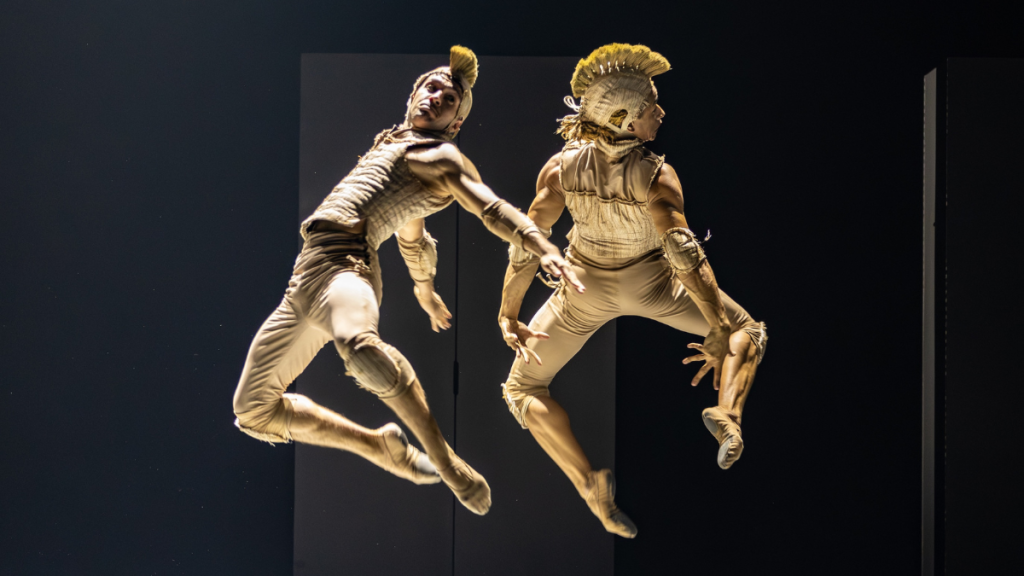
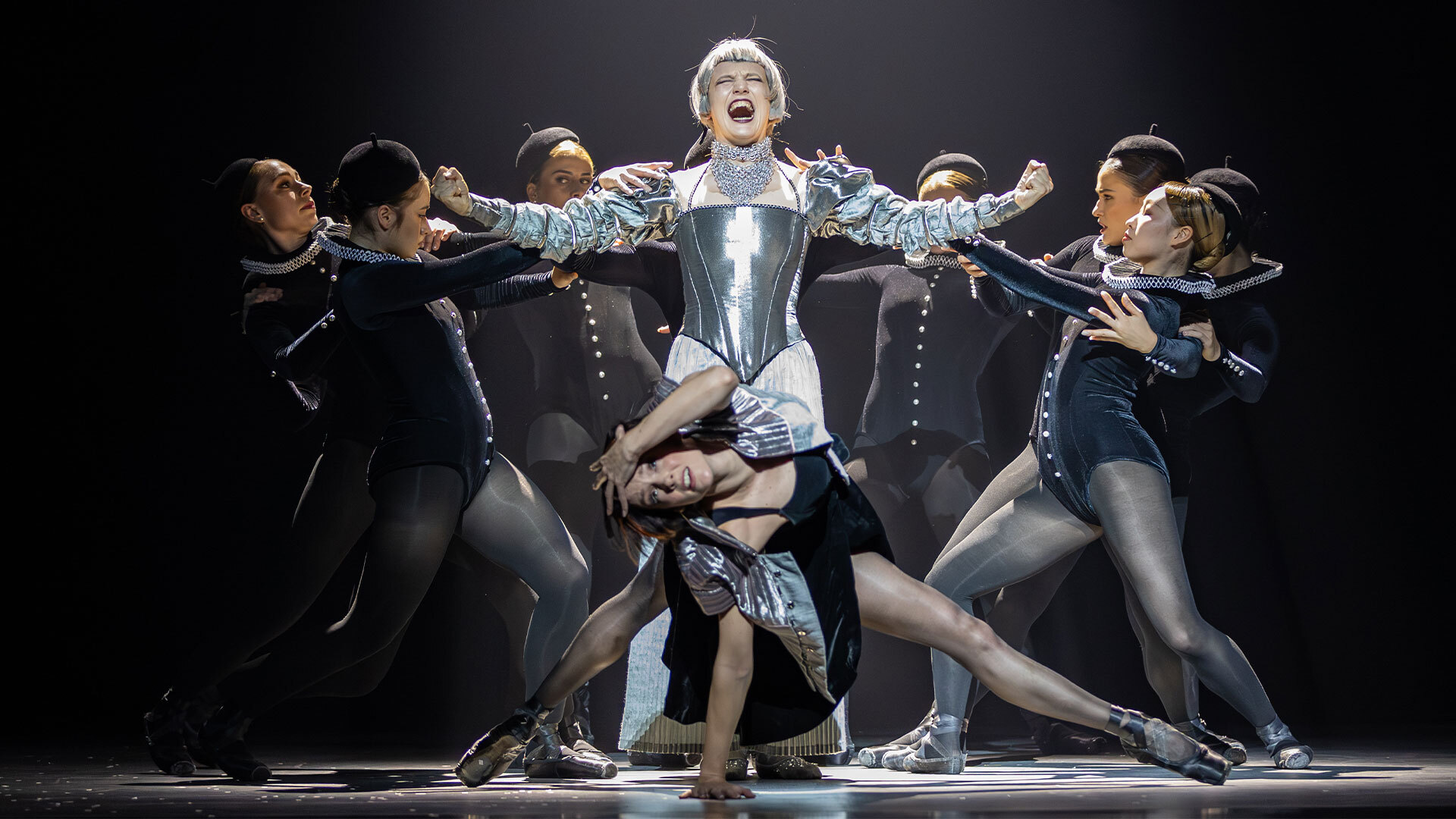
You’ll notice the sophisticated monochrome palette in Mary, Queen of Scots. Yet, as Mary Mullen points out, “When colour happens, it leaps at you. From the Jester’s neon-yellow velvet Lycra, to Francis the Dauphin of France and his mother, Catherine de’ Medici’s silver metallic. Likewise, the unexpected details—such as Rizzio’s tattoo sleeves, or the punk-inspired mohawks in the Elizabethan courts, and the spy’s falcon hoods, make a powerful impact.”
Amongst the specialist makers selected for Mary, Queen of Scots are Jane Gill and Suzanne Parkinson. “We love working with Scottish Ballet,” says Suzanne. The dressmaker duo has collaborated with Scottish Ballet for over 20 years and specialize in period costumes, custom-fitted fashion, and ballet. “Soutra’s designs appealed to us straight away,” says Jane. Their skills are sewn into Queen Mary’s signature black velvet costume, as well as the Chanel-inspired French courtiers.
A corset structure is made using “bones.” Queen Mary’s corset has enough bones to give a period look without being restrictive. Jane explains, “A traditional corset from this era would be completely solid, and in this specific era the desired look was to flatten the bust. Women would walk in a very stately way—they would not ever lift their arms. In dance, and especially Sophie’s contemporary choreography, the shoulders of a costume need to be able to move with the dancer.”
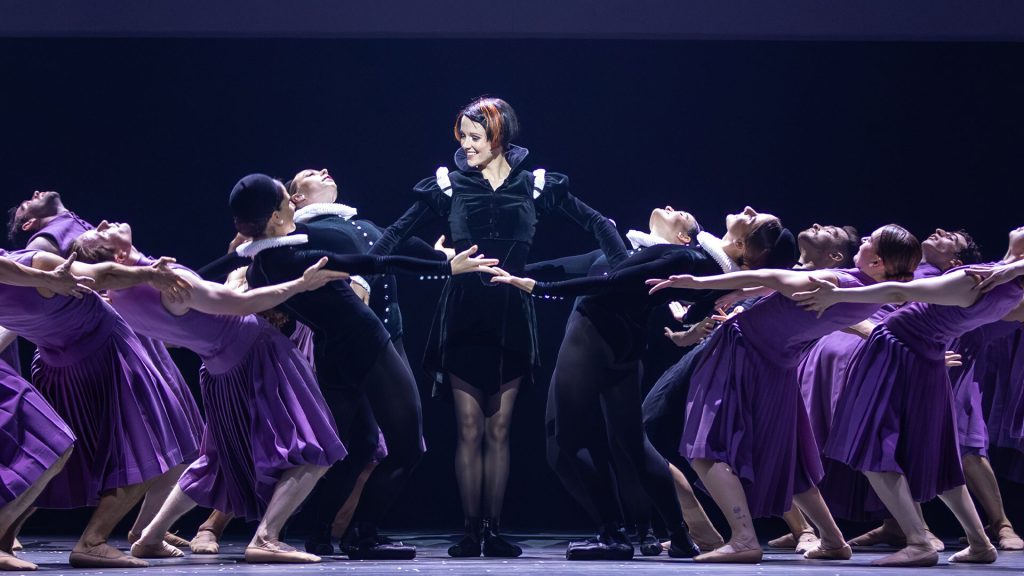
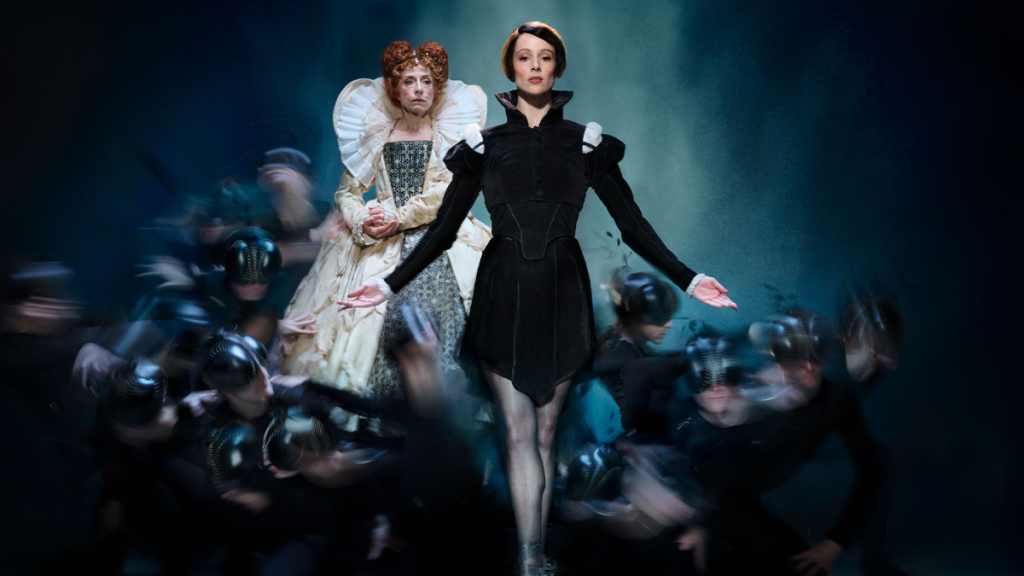
Soutra Gilmour’s designs bend the rules of classical ballet costuming. Tutus were never an option for this ballet; tutus are for fairies and ethereal characters. Elizabethan skirts are problematic because they hid the legs, and half the choreography with it. Skin tone tights and shoes are also off the rails too. Mary Mullen explains, “Mary’s black velvet costume nods to the Elizabethan era, but in a very modern way—you could wear this outfit today. There is a choker, but it is a thin ribbon bow with no jewels. A couture corset and jacket with a fan-shaped collar, but it’s short. The look is completed with a short skit, knee-high socks, and pointe shoes. It really works.”
Principal Roseanna Leney, who is dancing the role of Queen Mary, says, “Mary’s little black number ticks all the boxes. I feel elegant and sophisticated, yet free and able to move. I particularly love the cropped jacket with the raised collar, I feel espeically powerful!”
Costumes for the male French courtiers are a perfect example of how costume can become part of the choreography. First Artist James Garrington says, “The little tummies, which are actually a silicone pregnancy belly integrated into the costume, add to the flamboyance of the characters.”
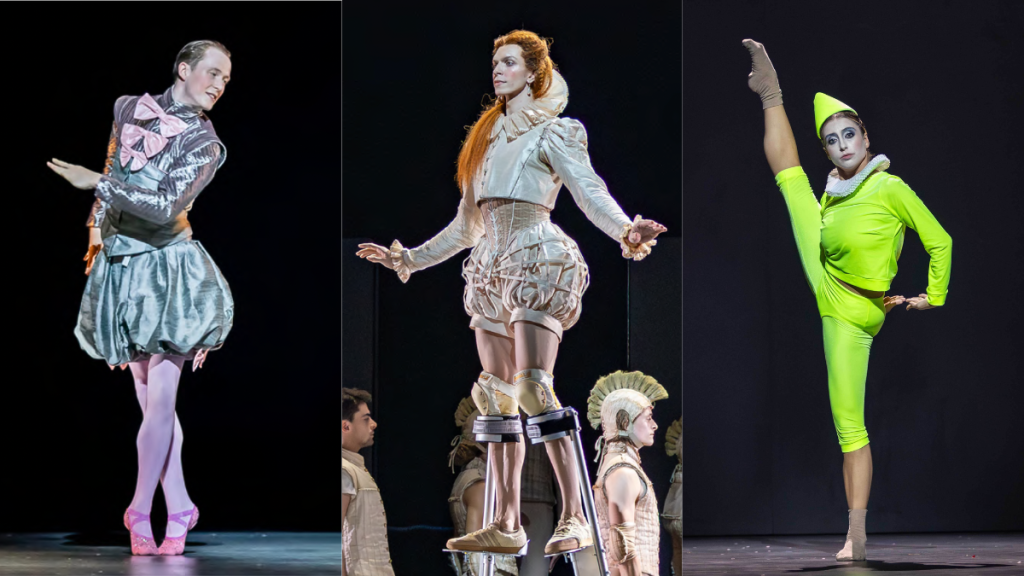
The ruffs for the female French courtiers (including the Four Marys) have been made exactly how they would have been made in Elizabethan times—delicate folds of cotton trimmed with a thin edge of cotton lace. First Artist Urara Takata says, “I’ve never danced wearing a ruff around my neck before, it does help me feel the historical context more deeply.” The bodice for this costume has been made to look like a corset but is a stretch fabric with added panelling.
Mary Mullen and her team pay special thought to how the costumes are worn. From the way the dancers will move in them, to the quick changes between scenes, and daily washing between shows. Urara confirms, “I was surprised how easy it is to move. So much creative thought has gone into these beautiful costumes, I love performing in them.”
So now you know, it takes more than the Four Marys to bring Mary, Queen of Scots to the stage.
This article was written by Scottish Ballet’s Senior Copywriter Sarah Potter and is reprinted here courtesy of Scottish Ballet.
Mary, Queen of Scots will be at the Spoleto Festival May 28–30 and then at the David H. Koch Theater at Lincoln Center June 4–7.
Featured Image: Madeline Squire (centre) as Catherine de Medici and Scottish Ballet in Mary, Queen of Scots. Photo by Andy Ross.