As the United States marks its 250th anniversary in 2026, arts organizations across the country are asking a complicated question: What does it mean to celebrate America? In ballet, the answer has never been simple. Unlike Europe, where national ballet traditions stretch back centuries, America built its dance identity relatively recently. The nation’s greatest choreographers drew inspiration from immigrant stories, frontier myths, wartime realities, jazz rhythms, baseball diamonds, and city streets. The result is a repertory unlike any other in the world—works that are unmistakably American in spirit, even when they challenge the very idea of patriotism itself. These are the productions that have come to define America through dance.
Stars and Stripes—George Balanchine (1958)
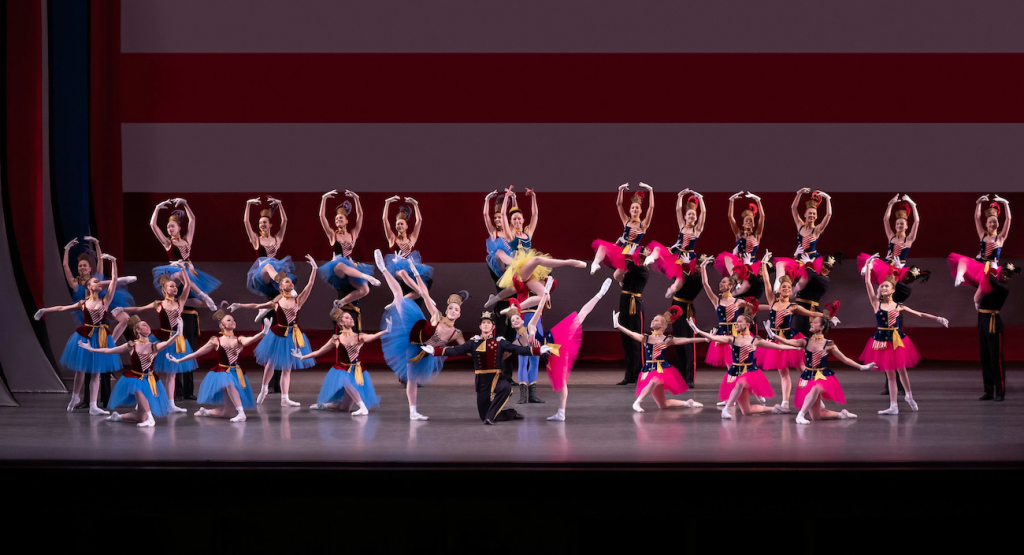
No ballet is more overtly patriotic than George Balanchine’s Stars and Stripes. Set to the marches of John Philip Sousa, the ballet is a jubilant celebration of the United States, created by an immigrant choreographer who embraced his adopted homeland with remarkable enthusiasm.
The ballet explodes with military pageantry, precision formations, soaring virtuosity, and costumes inspired by the American flag. Yet beneath the spectacle lies something more significant: a declaration that classical ballet, long associated with European courts, had found a permanent home in America.
Nearly seventy years after its premiere, Stars and Stripes remains the closest thing ballet has to a Fourth of July tradition.
Appalachian Spring—Martha Graham (1944)
If Stars and Stripes celebrates America’s confidence, Appalachian Spring celebrates its ideals. Created by Martha Graham during World War II and set to Aaron Copland’s iconic score, the work tells the story of a young pioneer couple building a life in nineteenth-century Pennsylvania. The ballet evokes faith, community, optimism, and the promise of the frontier.
Few artistic works capture the American spirit more completely. Copland’s music has become synonymous with national identity, while Graham’s choreography transformed everyday gestures into something monumental. Together they created a portrait of America that feels both intimate and epic.
The 10 Most American Ballets
Ever Created
1. Stars and Stripes (George Balanchine, 1958)
The ultimate patriotic ballet. Sousa marches, military precision, and a celebration of America’s postwar confidence.
2. Rodeo (Agnes de Mille, 1942)
Cowboys, ranch life, and the American West transformed into one of the nation’s most beloved dance works.
3. Fancy Free (Jerome Robbins, 1944)
Three sailors on leave in New York City. Ballet meets Broadway in a portrait of urban America.
4. Billy the Kid (Eugene Loring, 1938)
The frontier myth comes alive through Aaron Copland’s score and one of ballet’s earliest American stories.
5. Appalachian Spring (Martha Graham, 1944)
A timeless vision of pioneer life, faith, and the promise of the American experiment.
6. Western Symphony (George Balanchine, 1954)
Balanchine trades European courts for saloons and frontier towns in this energetic tribute to the Wild West.
7. Who Cares? (George Balanchine, 1970)
Set to the music of George Gershwin, this ballet captures the elegance, energy, and sophistication of New York City.
8. Company B (Paul Taylor, 1991)
A moving examination of America during World War II, balancing nostalgia with sacrifice.
9. Interplay (Jerome Robbins, 1945)
Youthful, athletic, and exuberant, Robbins’ early ballet celebrates the optimism of postwar America.
10. In the Upper Room (Twyla Tharp, 1986)
One of the defining American dance works of the late twentieth century, blending ballet, modern dance, athleticism, and relentless momentum.
Honorable Mentions
Serenade (Balanchine)
Square Dance (Balanchine)
Great Galloping Gottschalk (Balanchine)
American Rhapsody (Twyla Tharp)
Nine Sinatra Songs (Twyla Tharp)
Ghost Dances (Christopher Bruce)
The Times Are Racing (Justin Peck)
Taken together, these works reveal a distinctly American dance tradition—one built not on royal courts and fairy tales, but on immigrants, pioneers, city streets, jazz clubs, baseball fields, soldiers, dreamers, and the ever-evolving idea of America itself.
Rodeo—Agnes de Mille (1942)
Cowboys. Ranches. Open skies. Agnes de Mille’s Rodeo may be the most quintessentially American ballet ever made. Premiering during World War II, the work abandoned European fairy tales in favor of life on the American frontier. Set to another beloved Aaron Copland score, it tells the story of a spirited cowgirl searching for love and belonging in the West.
De Mille filled the ballet with folk movement, humor, and distinctly American characters. The result was revolutionary. Audiences recognized themselves onstage, and ballet suddenly felt less like an imported art form and more like something homegrown. Today, Rodeo remains one of the clearest examples of how American artists reshaped ballet into something uniquely their own.
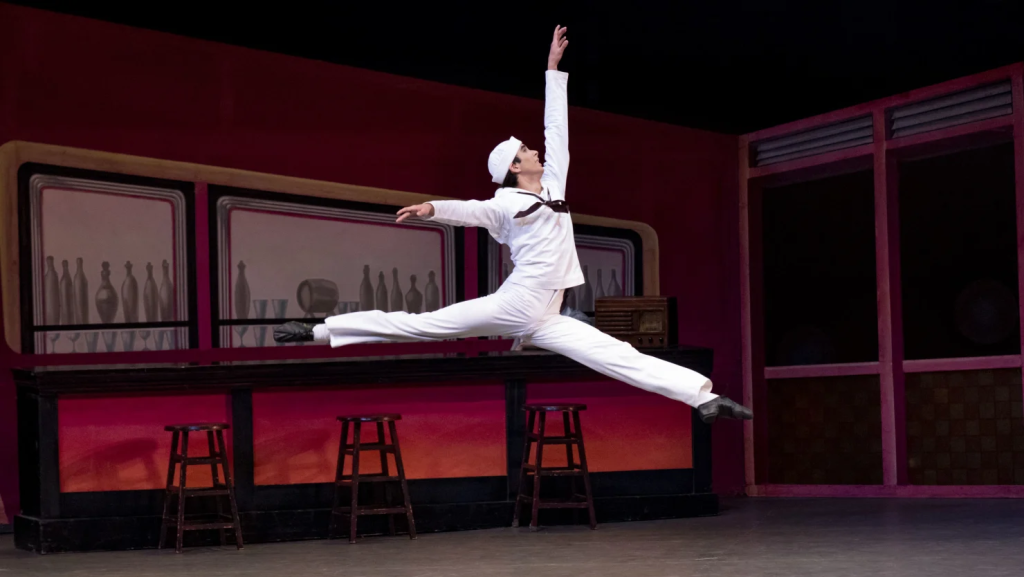
Fancy Free—Jerome Robbins (1944)
America is not only prairies and pioneers. It is also cities. Jerome Robbins’ Fancy Free captures New York during wartime through the adventures of three sailors on shore leave. Set to Leonard Bernstein’s vibrant score, the ballet combines classical technique with jazz, social dance, and Broadway energy.
The work feels modern even today. It is witty, fast-moving, romantic, and unmistakably urban. More importantly, it helped establish a distinctly American theatrical voice that would later influence Broadway itself through On the Town, which grew directly from the ballet. If Appalachian Spring is America’s pastoral dream, Fancy Free is its bustling reality.
Billy the Kid—Eugene Loring (1938)
Before Hollywood fully mythologized the American West, ballet did. Created for Ballet Caravan and set to Aaron Copland’s groundbreaking score, Billy the Kid transformed a legendary outlaw into the subject of serious American art. Its wide-open landscapes, folk-inspired movement, and cinematic storytelling helped establish the visual language of the American West in concert dance. The ballet remains one of the foundational works of American choreography and one of the earliest examples of artists embracing uniquely American subject matter.
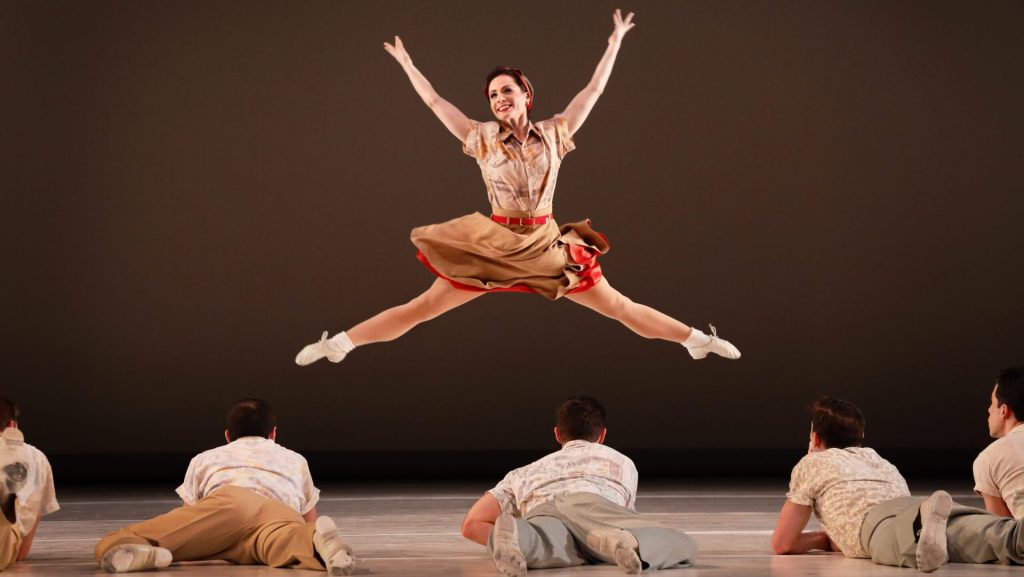
Company B—Paul Taylor (1991)
Not every patriotic dance work is celebratory. Paul Taylor’s Company B juxtaposes the cheerful songs of The Andrews Sisters with the realities of World War II. Beneath the swing-era optimism lies a poignant examination of loss, sacrifice, and uncertainty. Its inclusion in America 250 conversations demonstrates how contemporary audiences increasingly view patriotism through a broader lens—one that acknowledges both triumph and struggle.
The American Story Continues
The most fascinating aspect of American ballet is that it has never been defined by a single narrative. The nation’s dance heritage encompasses immigrants and pioneers, soldiers and sailors, city dwellers and ranch hands. It celebrates achievement while questioning assumptions. It honors tradition while constantly reinventing itself. That complexity may be the most American characteristic of all.
As organizations across the country commemorate America 250, these ballets remind us that dance has long been part of the national conversation. Together, they form a moving portrait of a nation still discovering who it is—250 years after its founding and nearly a century after ballet first found its American voice.
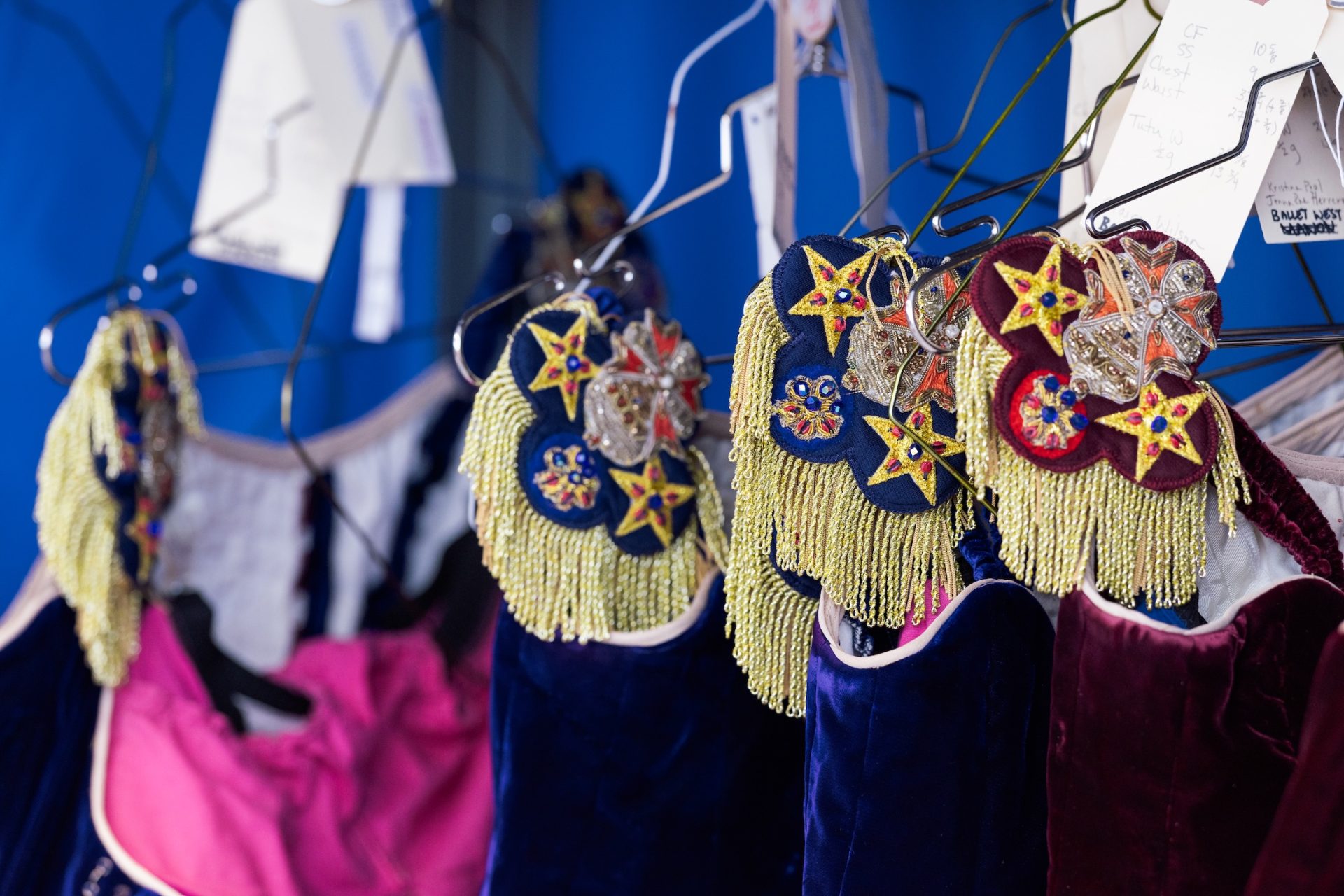
Featured Image: Costumes on racks for Balanchine’s Stars and Stripes // © San Francisco Ballet, photo by Lindsey Rallo